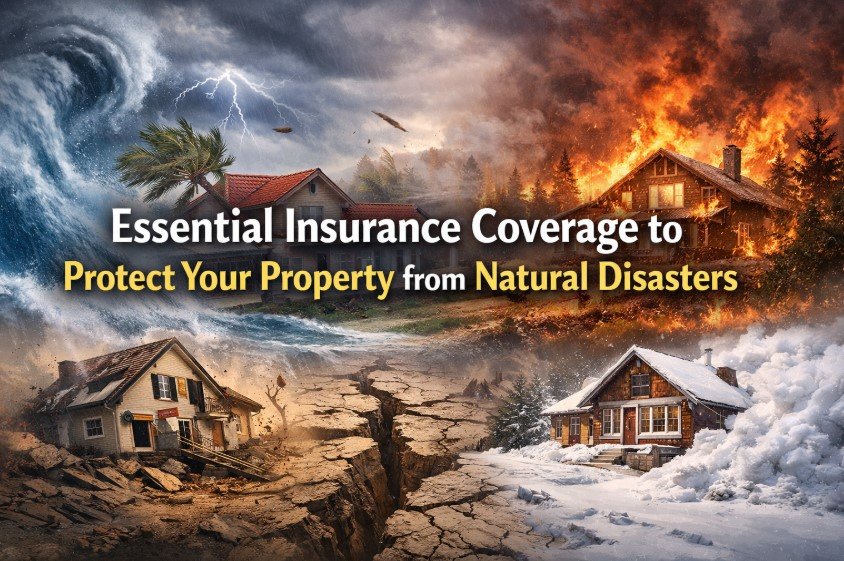
The proactive step of securing robust insurance coverage to protect your property from natural disasters is a critical component of responsible homeownership.
It is a safeguard against the unforeseen, a financial buffer that allows you to rebuild and recover without being overwhelmed by astronomical costs.
Standard homeowners’ insurance policies, while broad in their coverage, often have significant exclusions when it comes to natural catastrophes.
This is where specialized policies and endorsements become vital. We will explore these specific coverages, demystifying terms like flood insurance, earthquake insurance, and windstorm coverage, providing you with the knowledge to make informed decisions and tailor a protection plan that truly fits your needs.
In an unpredictable world, the peace of mind that comes from knowing your home and belongings are secure is invaluable. This is especially true when considering the increasing frequency and intensity of natural disasters.
Understanding insurance coverage to protect your property from natural disasters is not just a good idea; it’s a fundamental necessity for every homeowner.
From the unexpected fury of a hurricane to the quiet devastation of a wildfire, the forces of nature can strike anywhere, at any time, leaving a trail of damage and financial burden.
This comprehensive guide will delve into the intricacies of various insurance options, helping you navigate the complexities and ensure your sanctuary is adequately protected against whatever Mother Nature throws its way.
Understanding the Scope of Natural Disasters and Your Standard Policy
When exploring insurance coverage to protect your property from natural disasters, the first hurdle is often the “fine print” of a standard HO-3 policy. Most homeowners assume that if an event is “natural,” it is covered, but insurance companies categorize risks based on their predictability and potential for total loss.
A standard policy operates on a “named peril” or “open peril” basis, which creates a specific boundary between what is automatically protected and what requires a specialized rider.
To ensure your insurance coverage to protect your property from natural disasters is truly effective, you must dissect how these policies handle the various ways nature can attack a structure.
The Fire and Wildfire Clause: The Core of Protection
Fire is the oldest and most fundamental peril covered by homeowners’ insurance. In the context of insurance coverage to protect your property from natural disasters, this includes fires sparked by lightning, forest fires, and even volcanic eruptions.
Most policies provide comprehensive protection for the structure of the home (Dwelling Coverage) and the contents inside. However, in regions increasingly prone to massive wildfires, this coverage has become more complex.
Some insurers in high-risk zones may require specific mitigation efforts, such as creating “defensible space” by clearing brush, to maintain your insurance coverage to protect your property from natural disasters.
It is also important to note that fire coverage usually extends to smoke damage, which can be just as costly to remediate as the flames themselves.
Windstorms, Hurricanes, and the Hail Hazard
For many, the most visible part of insurance coverage to protect your property from natural disasters is the protection against wind and hail. Standard policies generally cover damage from tornadoes, straight-line winds, and severe hailstorms that can puncture roofs or shatter windows.
However, the “Hurricane Deductible” is a critical nuance you must understand. In coastal areas, insurers often shift from a flat dollar deductible to a percentage-based one (often 1% to 10% of the home’s total insured value) when a “named storm” strikes.
This means if your home is insured for $500,000, a 5% hurricane deductible would require you to pay $25,000 out of pocket before your insurance coverage to protect your property from natural disasters begins to pay for repairs.
Weight of Ice, Snow, and Sleet
Winter weather presents a unique set of challenges for property owners, and fortunately, standard insurance coverage to protect your property from natural disasters typically includes damage caused by the sheer weight of frozen precipitation.
If a heavy snowpack causes your roof to buckle or your gutters to collapse, the structural repair is usually covered. This protection is a vital component of insurance coverage to protect your property from natural disasters in northern climates.
Furthermore, this section often works in tandem with “frozen pipe” coverage, though insurers usually require that you have made a reasonable effort to maintain heat in the building or shut off the water supply to trigger a successful claim.
The “Earth Movement” Exclusion: A Massive Gap
One of the most dangerous misconceptions regarding insurance coverage to protect your property from natural disasters is the belief that landslides, sinkholes, and earthquakes are covered. Most standard policies explicitly exclude “earth movement.”
Whether the ground shifts because of a tremor or a mudslide following heavy rain, the resulting foundation cracks or total structural collapse are typically not covered. To bridge this gap, you must seek an “earthquake endorsement” or a “difference in conditions” policy.
Without these specific additions, your insurance coverage to protect your property from natural disasters will remain silent if the very ground beneath your home begins to move.
The Great Flood Divide: Water from Above vs. Water from Below
Perhaps the most significant distinction in insurance coverage to protect your property from natural disasters is how the industry views water. Generally, if water falls from the sky and enters through a hole in the roof caused by wind, it is covered.
However, if water touches the ground first and then enters your home, known as “seepage” or “flooding”, it is excluded. This includes storm surges from hurricanes or overflowing rivers.
Because this risk is so localized and potentially catastrophic, it is carved out of standard policies and relegated to the National Flood Insurance Program (NFIP) or private flood insurers.
Ensuring you have a separate flood policy is the only way to have complete insurance coverage to protect your property from natural disasters involving rising water.
Exclusions (and Why You Need Specialized Coverage)
The most significant exclusions in standard homeowners’ policies concerning natural disasters typically involve:
- Flooding: This is perhaps the most common and costly exclusion. Flood damage, whether from heavy rains, overflowing rivers, storm surges, or coastal flooding, is almost never covered by a standard policy. This necessitates a separate flood insurance policy.
- Earthquakes: Similar to flooding, earthquake damage, including tremors, landslides, and tsunamis resulting from an earthquake, is not covered by standard homeowners’ insurance. A separate earthquake policy or endorsement is required.
- Landslides and Mudslides (not caused by an earthquake): Unless directly caused by an earthquake (and even then, only if you have earthquake insurance), damage from landslides and mudslides is generally excluded.
- Sewer Backup: While sometimes an add-on, sewer backup damage is not always included in a standard policy. This can be a significant issue during heavy rainfall.
Understanding these exclusions is the first critical step in ensuring your insurance coverage to protect your property from natural disasters is truly comprehensive.
The Pillars of Specialized Natural Disaster Coverage
To bridge the gaps left by standard policies, homeowners must consider specialized insurance products. These are the pillars of robust protection against the most destructive forces of nature.
1. Flood Insurance:
For many, flood insurance is the most crucial supplemental policy. Flooding can occur anywhere, not just in designated flood zones. Heavy rainfall, blocked drainage, dam failures, and coastal storm surges can all lead to devastating water damage.
- The National Flood Insurance Program (NFIP): In the United States, most flood insurance is administered through the NFIP, a federal program. You can purchase NFIP policies through private insurance companies.
- Private Flood Insurance: A growing market of private insurers offers flood insurance, sometimes with higher coverage limits and different terms than NFIP policies.
- Coverage Details: Flood insurance typically covers the physical structure of your home and your personal belongings. There are often separate limits for building coverage and contents coverage.
- Waiting Period: Be aware that most flood insurance policies have a waiting period (often 30 days) before coverage goes into effect. This means you cannot wait until a storm is imminent to purchase a policy.
- Cost Considerations: The cost of flood insurance varies significantly based on your property’s flood risk, the amount of coverage, and the elevation of your home. Properties in high-risk flood zones are typically required by lenders to carry flood insurance.
Ignoring flood risk is a perilous gamble. Even if you’ve never experienced flooding, changing weather patterns and infrastructure issues can turn a typical rainstorm into a catastrophic event. Securing insurance coverage to protect your property from natural disasters must include flood protection.
2. Earthquake Insurance:
If you live in an earthquake-prone region, earthquake insurance is as essential as flood insurance. Earthquakes can cause severe structural damage, trigger landslides, and even lead to fires.
- What it Covers: Earthquake insurance typically covers damage to your home and belongings directly caused by seismic activity. This can include the cost to repair or rebuild your home, replace damaged personal property, and sometimes cover additional living expenses if your home becomes uninhabitable.
- Deductibles: Earthquake policies often have high deductibles, usually expressed as a percentage of your dwelling coverage (e.g., 10% or 15%). This means you will pay a significant amount out-of-pocket before your insurance kicks in.
- Exclusions: It’s important to note that earthquake policies often exclude damage from landslides, mudslides, and tsunamis unless they are a direct result of the earthquake itself.
- Cost Factors: Premiums for earthquake insurance depend on your home’s location, its construction type (older homes or those with unreinforced masonry are often more expensive to insure), and the amount of coverage you choose.
Don’t let the rarity of a major earthquake lull you into a false sense of security. When they strike, the damage can be immense, making earthquake insurance a critical component of your insurance coverage to protect your property from natural disasters.
3. Windstorm and Hail Insurance (for specific regions)
While most standard homeowners’ policies cover wind and hail, some coastal areas or regions highly susceptible to hurricanes and tropical storms have specialized windstorm and hail policies.
- Why Separate Policies? In high-risk areas, the immense destructive potential of hurricanes leads insurers to either exclude wind damage from standard policies or impose very high, separate deductibles.
- Coverage Details: These policies specifically cover damage caused by wind, wind-driven rain, and hail. This can include roof damage, broken windows, and structural damage.
- Hurricane Deductibles: If your standard policy includes wind coverage in a high-risk area, it will likely have a “hurricane deductible.” This is a separate, usually higher, deductible that applies only when damage is caused by a named hurricane or tropical storm.
- Eligibility: These policies are most commonly found in coastal states and regions with frequent hurricane activity.
If you live in an area prone to severe wind events, understanding the nuances of your wind and hail coverage is paramount for effective insurance coverage to protect your property from natural disasters.
Other Important Considerations for Comprehensive Protection
Beyond the primary policies, truly robust insurance coverage to protect your property from natural disasters requires looking at the secondary consequences of a catastrophe.
A disaster doesn’t just damage walls; it uproots your life, changes local building laws overnight, and creates massive cleanup challenges.
To ensure your insurance coverage to protect your property from natural disasters is airtight, you must consider these specialized endorsements that handle the “hidden” costs of recovery.
Additional Living Expenses (ALE)
If a disaster renders your home uninhabitable, the most immediate part of your insurance coverage to protect your property from natural disasters will be Additional Living Expenses, also known as “Loss of Use.”
This coverage pays for the surge in costs associated with living away from home, hotel stays, temporary apartment rentals, and even the increased cost of restaurant meals if you no longer have a kitchen. It is designed to maintain your standard of living while your sanctuary is being restored.
Without ALE as a core part of your insurance coverage to protect your property from natural disasters, you could find yourself paying both a mortgage and high-priced temporary housing costs simultaneously, which can lead to rapid financial exhaustion during an already stressful time.
Ordinance or Law Coverage
When a natural disaster strikes, local governments often update building codes to prevent future damage, requiring stronger materials or better engineering.
Standard insurance coverage to protect your property from natural disasters typically only pays to restore your home to its previous condition.
If new laws require you to install hurricane-resistant windows or a more fire-retardant roof, a basic policy won’t cover that “upgrade” cost. Ordinance or Law coverage is a vital endorsement that pays for these mandatory, legally-required improvements.
Without it, your insurance coverage to protect your property from natural disasters might leave you with a massive out-of-pocket bill just to satisfy local building inspectors before you are allowed to move back in.
Sewer Backup and Sump Pump Overflow
A significant but often overlooked aspect of insurance coverage to protect your property from natural disasters is protection against sewer backups.
During heavy rains or flash floods, municipal sewer systems can become overwhelmed, forcing wastewater back through your home’s drains and into your basement.
Similarly, if a power outage during a storm causes your sump pump to fail, your basement can flood within minutes. Because standard flood insurance and homeowners’ policies often exclude these specific scenarios, a “Sewer and Water Backup” rider is essential.
This ensures that your insurance coverage to protect your property from natural disasters accounts for the internal water damage that nature can indirectly cause.
Extended and Guaranteed Replacement Cost
Following a regional catastrophe, the demand for contractors and building materials skyrockets, leading to “demand surge” pricing. This can make the cost of rebuilding your home significantly higher than the limit on your policy.
To make your insurance coverage to protect your property from natural disasters more resilient, you should consider Extended Replacement Cost (which provides a buffer of 20% to 50% above your policy limit) or Guaranteed Replacement Cost (which pays the full rebuild cost regardless of the price).
These options act as a hedge against inflation and localized price spikes, ensuring that your insurance coverage to protect your property from natural disasters actually provides enough capital to finish the job.
Debris Removal: The Cost of Clearing the Way
After a major event like a tornado or a wildfire, your property may be covered in tons of twisted metal, fallen trees, or charred remains. Removing this wreckage is an expensive, labor-intensive process that must happen before rebuilding can even begin.
While most policies include some provision for this, the limits are often surprisingly low. Enhancing the debris removal portion of your insurance coverage to protect your property from natural disasters ensures you won’t be stuck with a $20,000 bill just to clear your lot.
When you think about insurance coverage to protect your property from natural disasters, remember that the path to recovery literally starts with a clean slate, and your policy needs to pay for that first step.
Basic Steps to Optimize Your Insurance Coverage to Protect Your Property from Natural Disasters
Ensuring you have the right insurance coverage requires a transition from passive bill-paying to active risk management.
Many homeowners mistakenly treat insurance as a “set it and forget it” utility, but in the face of shifting climates and rising construction costs, an outdated policy is often as dangerous as having no policy at all.
To truly optimize your insurance coverage, you must engage in a systematic review of your risks, your policy limits, and your physical property’s resilience.
Conduct a Localized Risk Assessment
The foundation of effective insurance coverage to protect your property from natural disasters is a clear-eyed assessment of what Mother Nature is most likely to do in your specific area.
Do not rely solely on general knowledge; instead, consult local flood maps, seismic history reports, and wildfire risk indices provided by local fire departments or emergency services.
Knowing your proximity to fault lines, floodplains, or dense brush allows you to prioritize which specialized policies, like flood or earthquake riders, are non-negotiable.
By identifying these specific threats, you can ensure that your insurance coverage to protect your property from natural disasters is targeted and cost-effective, rather than being a generic plan that misses the most probable dangers.
Align Policy Limits with Rebuilding Costs, Not Market Value
A common mistake when securing insurance coverage is insuring a home for its real estate market value.
In a disaster scenario, the land remains, but the cost to rebuild the structure can skyrocket due to labor and material shortages (often called “demand surge”).
To optimize your coverage, you must ensure your “Dwelling Coverage” limit reflects the actual cost to reconstruct your home from the ground up using current prices.
Working with a contractor or a professional appraiser to get a “replacement cost estimate” is a crucial step in fine-tuning your insurance coverage, ensuring you aren’t left with a $100,000 shortfall during a rebuild.
Maintain a Cloud-Based Digital Home Inventory
Your insurance coverage to protect your property from natural disasters is only as good as your ability to prove what you lost. After a catastrophic event, it is nearly impossible to remember every item in every drawer under the stress of the moment.
To optimize your claims process, take a weekend to film a video walkthrough of your home, opening closets and drawers, and narrating the age and value of high-ticket items. Store this video, along with digital scans of receipts and appraisals, in a secure cloud-based platform.
This ensures that even if your physical house is gone, your proof of loss remains accessible, making your insurance coverage to protect your property from natural disasters work exactly as intended.
Implement “Home Hardening” to Earn Discounts
Optimization isn’t just about buying more insurance; it’s about making your home less of a risk for the insurer. Many companies offer “mitigation discounts” if you take proactive steps to protect the structure.
This might include installing impact-resistant roofing, hurricane straps, or seismic shut-off valves for gas lines. By “hardening” your home, you not only reduce the chance of a total loss but can also lower the premiums of your insurance coverage to protect your property from natural disasters.
This creates a double benefit: your home is physically safer, and your financial protection becomes more affordable over the long term.
Schedule an Annual Policy Audit with an Independent Agent
The world of insurance changes rapidly, with new exclusions and coverage types appearing every year. To keep your insurance coverage at its peak, schedule a yearly review with an independent agent who can compare offerings from multiple carriers.
This audit should focus on checking for “inflation guards,” reviewing deductible amounts, and ensuring no new exclusions have been added to your standard policy.
An annual check-in ensures that your insurance coverage stays current with both the economy and your life changes, such as home renovations or new high-value purchases.
Proactive Mitigation and Its Impact on Insurance
While insurance provides financial protection, proactive steps to mitigate disaster risk can also influence your premiums and, more importantly, reduce the likelihood and severity of damage.
- Flood Mitigation: Elevating utilities, installing backflow valves, and improving drainage around your property can lower flood risk and potentially reduce flood insurance premiums.
- Earthquake Preparedness: Bolting your home to its foundation, securing water heaters, and bracing vulnerable structures can reduce earthquake damage.
- Windstorm Hardening: Installing hurricane shutters, reinforcing garage doors, and upgrading to impact-resistant windows and roofs can strengthen your home against high winds.
- Wildfire Defensible Space: Creating a defensible space around your home by clearing vegetation, maintaining landscaping, and using fire-resistant building materials can significantly reduce wildfire risk.
- Maintenance: Regular home maintenance, such as cleaning gutters and maintaining your roof, can prevent small issues from escalating into major problems during a storm.
In some cases, insurers offer discounts for homes that have undergone certain mitigation measures. Always inquire about these potential savings.
The Unseen Value: Peace of Mind and Recovery
Ultimately, the true value of robust insurance coverage extends far beyond mere financial compensation. It’s about the peace of mind that comes from knowing you have a plan in place.
When disaster strikes, the emotional toll can be immense. Having the financial resources to rebuild, replace, and recover allows you to focus on your family’s well-being and the process of returning to normalcy, rather than being crippled by insurmountable debt.
Choosing the right insurance coverage to protect your property from natural disasters is a journey of understanding, assessment, and proactive planning.
It requires you to look ahead, anticipate challenges, and make informed decisions today to safeguard your tomorrow. Don’t wait until the next storm warning or seismic tremor to evaluate your protection. Take action now to ensure your sanctuary is resilient, your finances are secure, and your peace of mind is truly protected.